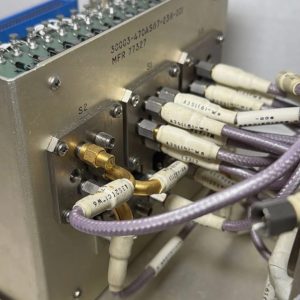
The Aviation Switching Module – NSN 4920-01-250-2696 (AS-IS / Untested) may be suitable for bench evaluation, training displays, component research, restoration work, parts harvesting, or inventory replacement after exact application verification.
The Aircraft Switching Module can form part of a specialized aviation system, while the Aerospace Switching Module requires identification through labels, technical documentation, connector configuration, and application records.
Every Aircraft Power Switching Module or Aircraft Signal Switching Module should be assessed individually because connectors, voltage, current, control logic, and system compatibility can vary significantly.
An Aircraft Switching Unit can support specialized signal or circuit management, but an Aerospace Power Distribution Module or Aviation Power Control Module may use different internal architecture and electrical requirements.
Overview of the Aviation Switching Module
Accurate NSN verification helps reduce purchasing errors and prevents an unrelated module from being represented as compatible equipment.
Military or aviation-surplus components may carry replacement numbers, superseded numbers, modification markings, or contract identifiers that assist research.
Untested Switching Module Condition
The condition description should be understood as a limitation rather than a suggestion that the unit is probably operational.
Improper voltage, polarity, grounding, current, signal input, or connector pin assignment can damage the module and connected equipment.
Choosing an Aircraft Switching Module
A module used with maintenance equipment may function differently from one installed onboard an aircraft.
A detailed visual inventory supports informed evaluation of the Aircraft Switching Module.
Rugged Aviation Module Design
The enclosure should be inspected for dents, cracks, corrosion, missing screws, altered holes, broken seals, and unauthorized repairs.
Unknown connectors should not be forced into visually similar plugs.
Inspecting Aviation Module Wiring
Discoloration near connectors or switches may indicate electrical heat, chemical exposure, or ordinary aging and should be investigated.
If the enclosure is opened for professional inspection, the process should be documented with photographs and organized hardware control.
Aviation Electrical Control Module Functions
An Aviation Electrical Control Module can coordinate or select electrical functions within a compatible aviation or support-equipment system, depending on its documented design.
Careful preservation supports future study and accurate Aviation Electrical Control Module documentation.
Choosing an Aircraft Power Switching Module
An Aircraft Power Switching Module may connect, disconnect, select, or manage compatible electrical power circuits when designed for that function.
A module with unknown electrical condition should remain clearly labeled as untested until formal evaluation occurs.
Aviation Control Unit Inspection
Its internal design may include electromechanical components, solid-state devices, wiring assemblies, circuit protection, or specialized connectors.
A common-looking relay, switch, resistor, connector, or wire may not be an acceptable substitute.
Aviation Signal Routing Equipment
An incorrect connection may damage sensitive electronics even when the module itself receives little power.
Original cable assemblies may add significant value when included.
Control Module Compatibility Review
Associated wiring, power supplies, interfaces, switches, displays, sensors, test sets, or aircraft equipment may be required for meaningful operation.
Inspection tags, modification plates, repair labels, and revision marks can provide important information.
Choosing an Aircraft Switching Unit
Detailed condition reporting supports fair commercial evaluation.
Training use should avoid destructive modifications when the component has collectible or restoration value.
Power Distribution Module Inspection
A module should not be loaded electrically until contact condition, insulation, wiring, and circuit configuration are understood.
Mounting points should be inspected because secure installation can affect grounding, cooling, vibration resistance, and connector alignment.
Choosing an Aircraft Electrical Control Unit
An Aircraft Electrical Control Unit should receive an organized inspection covering identification, enclosure condition, connectors, controls, labels, hardware, internal components, and signs of environmental exposure.
Unknown circuits should not receive voltage simply because a connector pin appears to be a power input.
Inspecting a Power Control Module
Responsible product information protects buyers seeking an Aviation Power Control Module.
Power-control components may retain electrical energy or contain circuits requiring special handling depending on internal design.
Aircraft Electronic Switching System Integration
A systems approach supports more accurate troubleshooting and restoration.
A replacement AS-IS unit may provide useful comparative parts but should not be installed without evaluation.
Protecting an Aerospace Switching Unit
The unit should not be stacked beneath heavy equipment or left on conductive surfaces.
The module should be enclosed in a moisture-resistant protective layer and placed inside a strong outer carton or suitable shipping case.
Evaluating Surplus Aerospace Equipment
Commercial evaluation should focus on total project suitability rather than the purchase price alone.
Transparent disclosure strengthens trust in an Aircraft Electrical Module transaction.
Inspecting the Aviation Switching Module Before Purchase
A detailed review reduces misunderstanding and supports realistic purchasing decisions.
- Confirm that the identification plate shows NSN 4920-01-250-2696 and record every manufacturer number, serial number, contract marking, revision, and modification label.
- Check for burned odors, melted material, arcing marks, water entry, chemical residue, and internal loose components where visible.
- Confirm the written invoice, AS-IS terms, payment protection, packaging method, shipping insurance, inspection period, and return conditions.
Aerospace Module Troubleshooting Process
A methodical process reduces the risk of damaging rare aviation equipment.
The test should stop immediately if overheating, smoke, arcing, excessive current, unstable operation, or unusual odor occurs.
Aircraft Electrical Module Repair Planning
Professional restoration can improve the usability and here value of the Aerospace Switching Module.
A repaired module may still require system-level testing or additional qualification before installation.
Aviation Switching Module Conclusion
The Aviation Switching Module – NSN 4920-01-250-2696 (AS-IS / Untested) may suit aviation workshops, military-surplus collectors, aerospace technicians, educational programs, equipment restorers, and specialist parts buyers.
An experienced aviation-electronics technician should assess the module before it is powered, installed, or connected to other equipment.
Whether the item is purchased for restoration, training, parts recovery, display, testing, inventory, or professional repair, transparent information and controlled handling provide the strongest foundation.
With verified identity, careful inspection, protected storage, safe bench procedures, organized documentation, and qualified technical review, the module can provide lasting specialist value.